
Russia Storia eBooks
eBooks con argomento Russia Storia di Formato Pdf Storia d'Europa
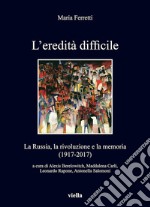
L’eredità difficile: La Russia, la rivoluzione e la memoria (1917-2017). E-book. Formato PDF Autori Vari - Viella Libreria Editrice, 2020 -
L’eredità difficile propone una selezione ragionata degli studi che Maria Ferretti ha dedicato alle rivoluzioni russe del 1917, alla resistenza operaia di fronte all’industrializzazione forzata, alla genesi dello stalinismo e al sistema del Gulag, alla memoria storica e agli usi pubblici del passato nella Russia contemporanea, selezione da cui emerge una coerente e originale analisi di processi spesso colti nella loro “dimensione umana” e con un’attenzione fuori dal comune per i fattori di modernizzazione e le circostanze di crisi. La rivoluzione bolscevica e lo stalinismo vi appaiono situati al punto di intersezione fra la lunga durata della storia russa, con la stabilità delle sue politiche, le sue credenze messianiche e il preponderante ruolo dello Stato nel plasmare la società, e la storia dell’Occidente, col suo modello industriale, il mito del progresso e il fascino dell’ingegneria sociale. Un volume necessario per decifrare una tra le potenze protagoniste dello scacchiere mondiale attuale, e del recente passato.
Culture, education and politics in late imperial Russia. Three essays. E-book. Formato PDF Giovanna Cigliano - Giannini Editore, 2013 -
The writings collected in this volume deal with several interrelated aspects of the intellectual, educational and political initiative developed by prominent representatives of the Russian cultural life during the period spanning from Alexander II's Great Reforms to the First World War. The first essay retraces the emergence of a tradition of studies on the French Revolution within the wider disciplinary context of vseobhschaia istoriia (Universal History). This «Russian school», which was personified by such figures as I. Luchitskii and N. Kareev, was able to make a pioneering contribution to international historiography, especially in the field of peasant and rural studies. Moreover, references to the French events as a key episode in the birth of modernity were given a major place also in the teaching of history and in works of scientific popularization, and their conflicting interpretations shaped the cognitive maps and patterns of behaviour of the political actors involved in the 1905 Revolution. The second essay traces the history of the attempts on the part of Russian intelligenty (foremost among them M. Kovalevskii) at creating their own independent institutions of higher education, first in the exile, and later, after 1905, in Russia itself. These efforts are analyzed here as the expression of their belief in the absolute need for spaces of open debate in order to emancipate Russia from autocracy and backwardness and transform its people from subjects into citizens of a constitutional and democratic polity. The third essay focuses on the image of Italy as outlined by the members of two different generations of Russian liberals, B. Chicherin and Kovalevskii himself, who toured the Italian Peninsula at the end of the 1850s and during the 1880s- 1890s, respectively. It aims to add a new piece to the rich mosaic emerging from the ongoing study of the perceptions and representations of the West circulating among the Russian cultivated elites in the last decades of Tsarism.