
Alessia Amighini eBooks
eBooks di Alessia Amighini con argomento C
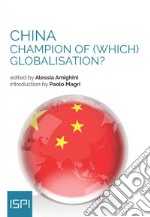
China: Champion of (Which) Globalisation?. E-book. Formato EPUB Alessia Amighini - Ledizioni, 2018 -
This year marks the 40th anniversary of China’s reforms and opening up. In four decades, China has learned how to grasp the benefits of globalisation and has become a world economic champion. As the world’s second-largest economy, today China is no longer the factory of the world but an industrial power aiming at the forefront of major high-tech sectors, in direct competition with Europe and the US. In sharp contrast with Trump’s scepticism on multilateralism, President Xi has renewed his commitment to growing an open global economy. But what does globalisation with Chinese characteristic look like? Is Beijing offering more risks or more opportunities to both mature and emerging economies? To what extent is China willing to comply with international rules and standards? Is Beijing trying to set its own global rules and institutions? Is the world destined to a new model of economic globalisation detached from political and cultural openness?
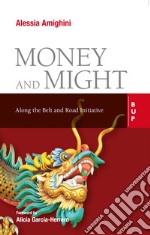
Money and Might: Along the Belt and Road Initiative. E-book. Formato EPUB Alessia Amighini - Egea, 2021 -
Launched by President Xi in 2013, the Belt and Road Initiative is at the heart of China’s internationalization strategy. In addition to the development of transportation infrastructure, trade and communication, it pursues financial cooperation with the rest of the world. Indeed, finance is the real lifeblood of the Initiative, the most innovative and disruptive part in its operational, institutional and political aspects. Through a network of offshore financial centers scattered across the continents, Chinese banks and stock exchanges are increasingly connected with foreign countries, while remaining within a financial system protected by controls on international capital flows, a regime of controlled exchange rate fluctuation and a publicly-owned credit sector. The network functions as a system of communicating vessels that pushes the circulation of the renminbi across borders and the “people’s currency” becomes an instrument of “reverse” globalization: it is not China that opens its financial sector to other countries, but the latter that welcome a growing Chinese presence on international markets. Along the BRI, finance flows smoothly and with it the soft power by which China is setting a new course in globalization.