
Maria Tsaneva eBooks
eBooks di Maria Tsaneva editi da Blagoy Kiroff di Formato Mobipocket
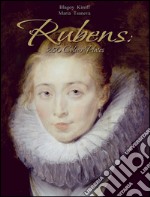
Rubens: 280 colour plates. E-book. Formato Mobipocket Maria Tsaneva - Blagoy Kiroff, 2015 -
International diplomat, savvy businessman, devout Catholic, fluent in six languages, an intellectual who counted Europe's finest scholars among his friends, Peter Paul Rubens were always first a painter. Few artists have been capable of transforming such a vast variety of influences into a style utterly new and original. From his workshop, with its many assistants, came quantities of book illustrations, tapestry designs, festival decorations, and paintings on every subject, which his engravers reproduced. He maintained control of the quality, while charging patrons according to the extent of his involvement on a picture. Frans Snyders, Jacob Jordaens, and Anthony van Dyck each assisted him. Rubens's impact was immediate, international, and long lasting. The works of Thomas Gainsborough and Eugene Delacroix, among others, testify to his posthumous influence.
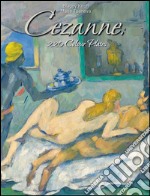
Cezanne: 220 Colour Plates . E-book. Formato Mobipocket Maria Tsaneva - Blagoy Kiroff, 2015 -
Paul Cézanne forms the connection linking late 19th century Impressionism and the early 20th century's new contour of Cubism. Matisse and Picasso together recognize that "Cezanne is the father of all us," so that his contribution to modern art just can not be rejected. Cézanne, who exhibited paintings rarely and lived progressively more in creative isolation, is considered nowadays as one of the greatest pioneers of modern art and painting, equally for the method that he evolved of putting down on canvas exactly what his eye saw in nature and for the qualities of form that he accomplished all the way through a unique dealing with space and color. He lived at the same tame with the impressionists, but went further than their goal of the personality brushstroke and the drop of light onto things, to build, as he say: "something more concrete and solid, similar to the art of the museums.''
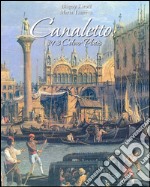
Canaletto: 193 colour plates. E-book. Formato Mobipocket Maria Tsaneva - Blagoy Kiroff, 2015 -
Giovanni Antonio Canal (1697 – 1768) better known as Canaletto, was an Italian painter of landscapes of Venice. He was also an important printmaker in etching.He was born in Venice as the son of the painter Bernardo Canal, hence his mononym Canaletto ("little Canal"), and Artemisia Barbieri. Bernardo Bellotto was his nephew and pupil. Canaletto served his apprenticeship with his father and his brother. He began in his father's occupation, that of a theatrical scene painter. Canaletto was inspired by the Roman vedutista Giovanni Paolo Pannini, and started painting the daily life of the city and its people. After returning from Rome in 1719, he began painting in his topographical style. His first known signed and dated work is Architectural Capriccio (1723). Studying with the older Luca Carlevarijs, a moderately-talented painter of urban cityscapes, he rapidly became his master's equal.Much of Canaletto's early artwork was painted "from nature", differing from the then customary practice of completing paintings in the studio. Some of his later works do revert to this custom, as suggested by the tendency for distant figures to be painted as blobs of colour – an effect produced by using a camera obscura, which blurs farther-away objects. However, his paintings are always notable for their accuracy: he recorded the seasonal submerging of Venice in water and ice. In this painting, the high viewpoint gives the illusion of looking out of a window, but there is no building in the position where the artist would have had to stand to use the "camera".Canaletto's early works remain his most coveted and, according to many authorities, his best. One of his early pieces is The Stonemason's Yard (1729) which depicts a humble working area of the city.Later Canaletto painted grand scenes of the canals of Venice and the Doge's Palace. His large-scale landscapes portrayed the city's pageantry and waning traditions, making innovative use of atmospheric effects and strong local colors. For these qualities, his works may be said to have anticipated Impressionism.Many of his pictures were sold to Englishmen on their Grand Tour, often through the agency of the merchant Joseph Smith, who was later appointed British Consul in Venice in 1744. It was Smith who acted as an agent for Canaletto, first in requesting paintings of Venice from the painter in the early 1720s and helping him to sell his paintings to other Englishmen.