
Alessandro Gili eBooks
eBooks di Alessandro Gili di Formato Epub Geopolitica
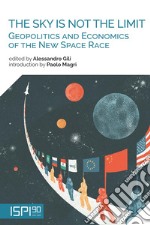
The Sky Is Not the Limit: Geopolitics and Economics of the New Space Race. E-book. Formato EPUB Alessandro Gili - Ledizioni, 2024 -
Space is a contested domain for its very nature and today it is evidently becoming an increasingly important enabler of economic and military power. An increasing number of actors, infrastructures and technologies deployed in space also raises concerns for safety and security, especially in cyberspace. Many countries are striving to achieve space capabilities and autonomous access to space, and this is having a tremendous geopolitical impact, especially since space is emerging as an increasingly critical military and strategic domain. The development of the new space economy, which is increasingly involving the private sector and many industrial actors and services, will also be a game changer for the international economy. The space race likewise implies disruptive technologies that could contribute massively to the energy and digital transitions, accelerating solutions that could benefit humanity. A new international governance system for space is therefore needed urgently, considering that the current rules are no longer able to respond to a sector evolving at such a rapid pace. Which actors are leading the race? Which economic sectors could benefit the most and what could the new space economy mean for the world? How is space emerging as a military domain against a backdrop of increasing international tensions? What would a new system of global governance for space look like?
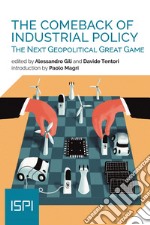
The Comeback of Industrial Policy: The Next Geopolitical Great Game. E-book. Formato EPUB Alessandro Gili - Ledizioni, 2024 -
Industrial policies are the key element underlying today's geopolitical scramble and a pillar of national security. Reacting to Western weaknesses and bottlenecks in the global supply chains, highlighted by multiple shocks such as the pandemic, the war in Ukraine, and the recent Israel-Hamas war, the US in first place and the EU later have started to introduce new industrial legislation aimed at making up for lost ground with respect to other industrial powerhouses, such as China. Besides being policy tools to accelerate the green and digital transitions, however, the US Inflation Reduction Act and the Net Zero Industry Act, as well as the US and the EU Chips Acts, entail subsidies, local content requirements and export controls targeted at strengthening the domestic industrial base for critical technologies, fostering strategic autonomy and de-risking from excessive foreign dependencies. This race poses risks for the weaponisation of industrial policies and fragmentation of international trade and also potentially jeopardises technological development. How can we strike a balance between economic security and efficiency? Which sectors are the most critical and which ones are the leading global powers pursuing? What will the consequences be for global value chains and international trade? Is it possible to reach an agreement on rules for a new level playing field to prevent economic competition turning into economic warfare?