
Massimo Firpo eBooks
eBooks di Massimo Firpo di Formato Pdf
Massimo Firpo, accademico dei Lincei, ha insegnato Storia moderna alle Università di Cagliari e di Torino (di cui è professore emerito) e alla Scuola Normale di Pisa. Tra le sue più recenti pubblicazioni, L'eretico che salvò la Chiesa. Il cardinale Giovanni Morone e le origini della Controriforma (con G. Maifreda, Torino 2019) e Studi e lezioni sulla vita religiosa del Cinquecento (Alessandria 2020). Per Laterza è autore di: Riforma protestante ed eresie nell'Italia del Cinquecento. Un profilo storico (1993); Artisti, gioiellieri, eretici. Il mondo di Lorenzo Lotto tra Riforma e Controriforma (2001); Vittore Soranzo vescovo ed eretico. Riforma della Chiesa e Inquisizione nell'Italia del Cinquecento (2006); La presa di potere dell'Inquisizione romana. 1550-1553 (2014); Juan de Valdés e la Riforma nell'Italia del Cinquecento (2016); Immagini ed eresie nell'Italia del Cinquecento (con F. Biferali, 2016).
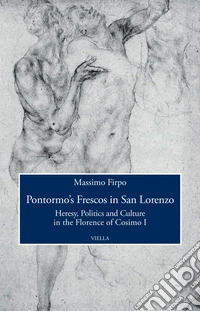
Pontormo’s Frescos in San Lorenzo: Heresy, Politics and Culture in the Florence of Cosimo I. E-book. Formato PDF Massimo Firpo - Viella Libreria Editrice, 2021 -
In the choir of the Basilica of San Lorenzo, a truly sacred temple of the Medici dynasty, Pontormo painted a grandiose cycle of frescos between 1545 and 1556, which were then unfortunately destroyed in the mid-18th century. Far earlier, Giorgio Vasari issued a severe judgment on them that lasted into the modern day. His was a dismissal motivated formally by artistic reasons, but it concealed other, more insidious, ideological and religious motivations. On the basis of drawings, copies, paintings and literary sources, this study reconstructs the design and arrangement of the frescoes, revealing them to have been inspired by a contemporary heterodox text, one that was included in the Index in 1549. From a dense web of Florentine religious, cultural and political life and its shifts in the middle decades of the century, the political motivations underlying Vasari's commitment to transforming the doctrinal heresy from which those grandiose paintings had drawn inspiration into an artistic heresy emerge. It was a commitment that, after the conclusion of the Council of Trent, risked reflecting upon the new Counter-Reformist structure of Medici power.
Riforma cattolica e concilio di Trento: Storia o mito storiografico?. E-book. Formato PDF Massimo Firpo - Viella Libreria Editrice, 2022 -
Quali furono i caratteri salienti della reazione messa in campo dalla Chiesa cattolica nel ’500 per reagire alla drammatica crisi della Riforma protestante? E quali categorie storiche meglio ne definiscono la natura? Con varia fortuna si è parlato di Restaurazione cattolica, Riforma cattolica, Controriforma, ora contrapponendo l’una all’altra ora tentandone una difficile sintesi. Il libro ricostruisce tale discussione, per concentrarsi poi sulle aporie della cosiddetta Riforma cattolica e sulla stentata e talora inesistente applicazione dei decreti emanati dal concilio di Trento anche un secolo dopo la sua fine, il che non impedì tuttavia la creazione di un mito del Tridentino quale momento genetico di un profondo e capillare rinnovamento religioso che trovò invece a Roma più ostacoli che sostegno. Di qui la persistente validità del concetto di Controriforma che occorre piuttosto declinare come costante opposizione dei vertici della gerarchia ecclesiastica a ogni autentica Riforma cattolica.
Catholic Reformation and the Council of Trent: History or Historiographical Myth?. E-book. Formato PDF Massimo Firpo - Viella Libreria Editrice, 2023 -
What were the salient features of the reaction launched by the Catholic Church in the 16th century in response to the dramatic crisis of the Protestant Reformation? And which historical terms best define it? Scholars have spoken of Catholic Restoration, Catholic Reformation and Counter-Reformation with varying success, often interpreting these concepts as alternatives and at times looking to draw a difficult synthesis between them. This book examines the historiography of the so-called Catholic Reformation and its aporias, focusing on the stunted and sometimes non-existent application of the decrees issued by the Council of Trent even a century after its end. This, however, did not prevent the creation of a myth of the Tridentine council as the genesis of a profound and widespread religious renewal, even though it encountered more obstacles than support in Rome. It also explains the ongoing validity of the concept of Counter-Reformation, which should be understood as the constant opposition of the Roman curia to any authentic Catholic Reformation.