
Francesco Petrucci eBooks
eBooks di Francesco Petrucci
La Luce del Barocco: Dipinti da collezioni romane. E-book. Formato PDF Francesco Petrucci - Gangemi Editore, 2020 -
Catalogo della mostra aperta ad Ariccia presso Palazzo Chigi dal 1 ottobre 2020 al 10 gennaio 2021 L'evento espositivo La Luce del Barocco vuole evidenziare, attraverso l'Arte e il significato della Luce come motivo espressivo, quanto sia importante per il Patrimonio Artistico nazionale l'attività di ACEA S.p.a., che, oltre ai servizi per cui è stata costituita, illumina in modo straordinario Monumenti, Chiese e Palazzi Storici, punto di attrazione di milioni di turisti presenti a Roma per ammirarne le testimonianze di storia e cultura plurimillenarie. L'arte barocca, che proprio nella Capitale d'Italia trova la sua origine e le sue più alte manifestazioni, si presta magnificamente a questo, in quanto la Luce, in tale espressione artistica tipica del Cattolicesimo, si carica di significati simbolici e mistici, legati al tema della Grazia e della redenzione dell'uomo, di cui è visualizzazione. Pensiamo alla luce nei quadri di Caravaggio e nelle opere del Bernini. Palazzo Chigi in Ariccia, ideato da Bernini per la famiglia del papa Alessandro VII, si presta particolarmente ad ospitare tale evento, essendo sede del Museo del Barocco Romano e una della dimore barocche più importanti d'Italia. Ariccia stessa, trasformata da Bernini in città ideale barocca, conserva molte opere legate a questo stile. La Chiesa Collegiata dell'Assunta, capolavoro della maturità del Bernini, ove Luce fisica e Luce divina formano un'unità in chiave simbolica, è una concreta espressione del valore salvifico della Grazia. Una mostra legata al tema della Luce in questo particolare momento che stiamo vivendo, vuole esprimere speranza e rinascita, dopo mesi di clausura e segregazione forzata. La Luce ha da sempre un valore metaforico connesso alla nascita, al risveglio dopo la notte, alla resurrezione della natura dopo l'inverno e per il Cattolicesimo ad un messaggio di speranza di vita eterna suscitato dalla sequela del messaggio di Cristo. Il Barocco quindi, che del Cattolicesimo è la massima espressione artistica, è lo stile più adatto per veicolare un messaggio ottimistico di riscatto umano e sociale dopo la Pandemia. Viene presentata in mostra una selezione di importanti dipinti di artisti di chiara fama provenienti da collezioni private romane, in gran parte inediti o mai esposti al pubblico. L'evento vuole incentivare e promuovere il collezionismo, come agente culturale del rinnovamento della ricerca, motore economico del settore e tramite di arricchimento di collezioni pubbliche, ove spesso le raccolte private confluiscono per lasciti e donazioni. Vengono esposte opere di Bernini e della sua cerchia, assieme a dipinti di Giovanni Baglione, Mattia Preti, Agostino Tassi, Gaspar Dughet, Sebastiano Conca, Pierre Subleyras e altri maestri del Seicento e Settecento, offrendo una larga panoramica sull'arte barocca per quasi due secoli. La mostra è articolata in vari generi pittorici, tra ritratti, pittura di figura a soggetto sacro e profano, paesaggi, vedute e nature morte. Motivo conduttore: la Luce come veicolo comunicativo, formale e simbolico, segno di ottimismo e rigenerazione. Giuseppe Lepore Presidente Centro Europeo per il Turismo, Cultura e Spettacolo
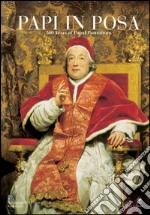
Papi in Posa: 500 Years of Papal Portraiture. E-book. Formato EPUB Francesco Petrucci - Gangemi Editore, 2016 -
The exhibition entitled “Papi in Posa,” i.e., “Papal Portraiture,” with the highly refined and historically significant Braschi Palace – home of the Museum of Rome – in 2004, and now in Washington, The John Paul II Center, is not offered only as an excellent exposition of masterpieces from major international museums – such as the Vatican Museums – and prestigious private collections, but stands out in particular because it is one of the most important expositions of portrait painting ever because of both the outstanding quality and the considerable number of paintings and sculptures offered – executed by Europe's leading artists from the last five centuries – and the great spiritual and social significance of the personages portrayed: the greatest Pontiffs who from the 16th century to the present have sat in the Chair of Saint Peter. It is suggestive to observe, as we scan the unique artistic itinerary offered by the curators of the exhibition, how through the succession of historical periods and particularly by virtue of the esthetic verve and inner sensitivity of the artists, the description of the human person was oriented, with extreme plastic ductility and acuity in their perception of their subjects' physiognomy, to represent not only the body lines of the subject being depicted but, in particular, the most intimate traits of the heart, the lively mobility of their thought, the innermost lines of the subject's character, in an intense dialogue of chiaroscuro observations from which the characterizing notes of complex personages are evinced – persons who appear completely clear and evident only to those who are capable of sublimating their outward appearance into an acute observation. From this prestigious gallery of portraits it emerges unmistakably how the anthropocentric path of human thought has manifestly reverberated within the bounds of the figurative arts through a progressive contextualization, which sees the subject represented unbound through a metatemporal aura of rarefied abstraction and placed, naturalistically, in a precise and well defined spatiotemporal sphere. At the same time, we witness a gradual definition of the personage portrayed as the bearer of a clear personal connotation – the self and the identity, which seem to be invisible and thus impossible to represent – no longer, hortatively, as an idealized and metaphoric emblem of absolute values in deference to a markedly ethical and pedagogical conception. The exhibited works, which rightfully range themselves among the most outstanding expressions of portraiture, reveal a deep spiritual harmony evocative of beauty and unleash a lively dialogue with the onlooker based on a real and inherent economy of the act of viewing, albeit freed from the exercise of a psychologism oriented toward uncontrollable wanderings. The reception of the meaning of the formal systems – thoughtful poses and attitudes – involves, to be sure, the active presence of the spectator in a sort of visual dialogue with the portrait that is not considered exclusively as a fixed commemorative system but rather as an interactive structure.