
Edusc eBooks
eBooks editi da Edusc con argomento Communication
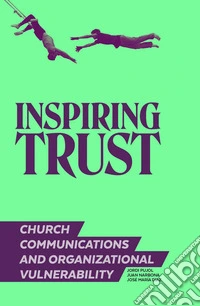
Inspiring Trust: Church Communications & Organizational Vulnerability. E-book. Formato EPUB Jordi Pujol Soler - Edusc, 2021 -
Technology is furthering a swift and profound economic, social and cultural change: not only the digital economy and new information flows, but also personal habits and styles of life, even our relationships, are deeply shaped by technology. This ongoing new scenario poses some challenges to organizations that are called to be transparent and accountable, and to understand what to do in the digital ecosystem. As Pope Francis said, “what we are experiencing is not simply an epoch of changes, but an epochal change. We find ourselves living at a time when change is no longer linear, but epochal”. Those words were pronounced just some months before the coronavirus pandemic, a global situation that worsened the weakening and increasing uncertainty of relationships brought about by the digital revolution. A new world was coming and old powers were losing control over it. The pandemic fostered societal fears. People didn’t trust their leaders’ capability to guide them or to take the right decisions. This lack of leadership put trust in institutions to the test, but that distrust was not something new. Statistics show that since the 90’s, trust in some organizations that have been the backbone of society is plummeting. Cultural and social changes together with scandals and incoherence on the part of some groups led publics to evaluate organizations more rigorously than ever. A culture of suspicion toward political parties, financial institutions, trade unions, the media, and also – of course – the Church, has since then been the norm.
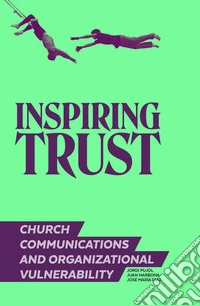
Inspiring Trust: Church Communications & Organizational Vulnerability. E-book. Formato PDF Jordi Pujol Soler - Edusc, 2021 -
Technology is furthering a swift and profound economic, social and cultural change: not only the digital economy and new information flows, but also personal habits and styles of life, even our relationships, are deeply shaped by technology. This ongoing new scenario poses some challenges to organizations that are called to be transparent and accountable, and to understand what to do in the digital ecosystem. As Pope Francis said, “what we are experiencing is not simply an epoch of changes, but an epochal change. We find ourselves living at a time when change is no longer linear, but epochal”. Those words were pronounced just some months before the coronavirus pandemic, a global situation that worsened the weakening and increasing uncertainty of relationships brought about by the digital revolution. A new world was coming and old powers were losing control over it. The pandemic fostered societal fears. People didn’t trust their leaders’ capability to guide them or to take the right decisions. This lack of leadership put trust in institutions to the test, but that distrust was not something new. Statistics show that since the 90’s, trust in some organizations that have been the backbone of society is plummeting. Cultural and social changes together with scandals and incoherence on the part of some groups led publics to evaluate organizations more rigorously than ever. A culture of suspicion toward political parties, financial institutions, trade unions, the media, and also – of course – the Church, has since then been the norm.
Communication in Church Events: The Making of WYD Madrid 2011. E-book. Formato PDF Yago De La Cierva - Edusc, 2015 -
WYD 2011 Communications Department has prepared this report in the hopes that it will be a tool for those who plan future World Youth Days, as well as other major Church events. We would like to share our experience – including the challenges and our decision-making criteria – with communications professionals (communications directors for companies and organizations, journalists, journalism professors and public relations specialists). Our objective is to present the lessons learned in the form of a case study in order to contribute to the progress of public relations as a profession, and to Church communications in particular. We have tried to humbly describe what we did well and what we did poorly. We learn more from our failures than from our successes, though no one ever enjoys looking at their failures. Events are nothing more and nothing less than instruments of communication, since everything in an event is part of passing on a message. Today, entertainment is a large element of communications, and many companies and organizations use events to explain who they are and what they do, both internally and externally. Event planning has come of age and has gained a place among other older disciplines such as corporate communications, media relations and crisis communications. The bulk of this report is dedicated to outlining the WYD communications strategy, followed by details of the activities carried out during the event: social media, the website, media relations, marketing and promotion, IBC and TV signal. In addition, we have added an introduction concerning WYD’s identity and management to provide a context. Co-Authors: María José Abad, Daniel Arasa, Patricia Capa de Toca, Borja Ezcurra, Antonio Gallo, Kristen Gardner, María Gil-Casares, Gabriel González-Andrío, Marieta Jaureguizar, Ivo Leahy, Jorge Milán, Montse Pérez, Mariano Rodríguez, Paula Rodríguez, Rafael Rubio, and Javier Sobrino. The editor has added to these reports and given them uniformity of style.