
Firenze University Press eBooks
eBooks editi da Firenze University Press con argomento Filologia
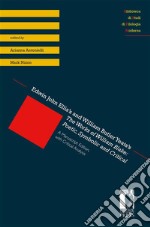
Edwin John Ellis’s and William Butler Yeats’s The Works of William Blake: Poetic, Symbolic and Critical: A Manuscript Edition, with Critical Analysis. E-book. Formato PDF Arianna Antonielli - Firenze University Press, 2016 -
Edwin John Ellis’s and William Butler Yeats’s The Works of William Blake: Poetic, Symbolic and Critical. A Manuscript Edition, with Critical Analysis presents, for the first time, the manuscript – in facsimile and transcription – of the so-called Quaritch Edition (1893), written and edited by Edwin John Ellis and W.B. Yeats. The relevant manuscript material is held at Special Collections of the University of Reading, within the “Papers of Edwin John Ellis” (MS 293/2/2), and at the National Library of Ireland in Dublin (NLI MSS 30,289 and 30,534). This edition, with a rich apparatus of editorial and critical notes, will yield new insights and discoveries about the genesis and the composition of The Works of William Blake, give the reader a sense of how the manuscript corpus relates to the published version, and thus provoke new critical discussions. Arianna Antonielli holds a PhD in English and American Literature and is specialized in Humanities Computing and Digital Publishing. She teaches Digital Culture and collaborates to The OA Publishing Workshop and Project (The University of Florence). She has written on Blake, T.S. Eliot, France, Gyles, Peake, C.A. Smith and Yeats. Mark Nixon is Associate Professor in Modern Literature at the University of Reading, where he is also the Co-Director of the Beckett International Foundation. He has published widely on the work of Samuel Beckett, modern European writing and textual scholarship.
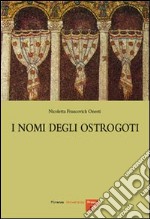
I nomi degli ostrogoti. E-book. Formato PDF Nicoletta Francovich Onesti - Firenze University Press, 2007 -
Il volume raccoglie l'intero corpus degli antroponimi ostrogoti, ricavati dalla schedatura delle fonti tardo-antiche latine, greche e gotiche, sia manoscritte che epigrafiche, anche di recente ritrovamento e pubblicazione. A differenza di altri precedenti trattati, i nomi qui raccolti non riguardano solo il periodo del regno ostrogoto d'Italia, ma anche i secoli precedenti, da quando cioè si comincia a discernere la compagine ostrogota nella storia. E si includono anche quei nomi di tradizione gotica che in Italia persistono dopo il 553, arrivando in certe zone fino ai primi anni del VII secolo. Ciò consente di cogliere l'evoluzione nel tempo dell'onomastica ostrogota: l'influenza dei nomi latini, i casi di nomi doppi latino-gotici, di matrimoni misti, di mode nella scelta dei nomi da parte delle famiglie, che seguono i cangianti atteggiamenti religiosi e politici dell'epoca. Seguono, negli ultimi capitoli, le analisi linguistiche che delineano le caratteristiche dell'antroponimia degli Ostrogoti, le sue peculiarità fonetiche, l'interferenza del latino, gli adattamenti morfologici nelle fonti tardo-antiche sia latine che greche.