
Classic Ebooks eBooks
eBooks editi da Classic Ebooks di Formato Mobipocket Raccolte di poesia di singoli poeti

Leaves of grass. E-book. Formato Mobipocket Walt Whitman - Classic Ebooks, 2012 -
"Leaves of Grass" is a poetry collection by the American poet Walt Whitman (1819–1892). Though the first edition was published in 1855, Whitman spent his entire life writing Leaves of Grass, revising it in several editions until his death. This book is notable for its delight in and praise of the senses during a time when such candid displays were considered immoral. Where much previous poetry, especially "English", relied on symbolism, allegory, and meditation on the religious and spiritual, "Leaves of Grass" (particularly the first edition) exalted the body and the material world. Influenced by Ralph Waldo Emerson and the Transcendentalist movement, itself an offshoot of Romanticism, Whitman's poetry praises nature and the individual human's role in it. However, much like Emerson, Whitman does not diminish the role of the mind or the spirit; rather, he elevates the human form and the human mind, deeming both worthy of poetic praise.
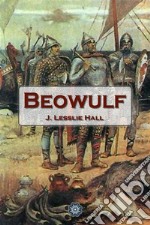
Beowulf. E-book. Formato Mobipocket Hall J. Lesslie - Classic Ebooks, 2012 -
"Beowulf" is the conventional title of an Old English heroic epic poem consisting of 3182 alliterative long lines, set in Scandinavia, commonly cited as one of the most important works of Anglo-Saxon literature. It survives in a single manuscript known as the Nowell Codex. Its composition by an anonymous Anglo-Saxon poet is dated between the 8th and the early 11th century. In 1731, the manuscript was badly damaged by a fire that swept through a building housing a collection of Medieval manuscripts assembled by Sir Robert Bruce Cotton. The poem fell into obscurity for decades, and its existence did not become widely known again until it was printed in 1815 in an edition prepared by the Icelandic-Danish scholar Grímur Jónsson Thorkelin. In the poem, Beowulf, a hero of the Geats in Scandinavia, comes to the help of Hroðgar, the king of the Danes, whose mead hall (Heorot) has been under attack by a being known as Grendel. After Beowulf slays him, Grendel's mother attacks the hall and is then also defeated. Victorious, Beowulf goes home to Geatland in Sweden and later becomes king of the Geats. After a period of fifty years has passed, Beowulf defeats a dragon, but is fatally wounded in the battle. After his death, his attendants bury him in a tumulus, a burial mound, in Geatland. Translated and annotated by J. Lesslie Hall.