
Elizabeth Macdonald eBooks
eBooks editi da Elizabeth Macdonald di Formato Mobipocket
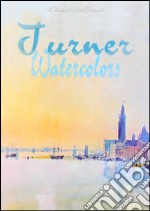
Turner: watercolors. E-book. Formato Mobipocket Elizabeth Macdonald - Elizabeth Macdonald, 2015 -
"My job is to draw what I see, not what I know." - J. M. W. Turner Joseph Mallord William Turner was English artist, one of the greatest and most imaginative painters who put on a pedestal landscape painting. Although renowned for his oils, he is as well one of the masters of British watercolor landscape painting. Having been skilled academically, Turner seemed to spend the rest of his life developing an ever more loose style. He uncompromisingly studied nature and light. He had a extraordinary production of drawings and paintings; upon his death, he left nearly 30,000 pieces of his art work. He is usually known as "the painter of light" and his work is considered as a Romantic prelude to Impressionism.
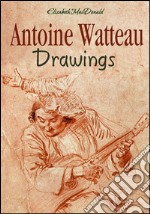
Antoine Watteau drawings. E-book. Formato Mobipocket Elizabeth Macdonald - Elizabeth Macdonald, 2015 -
One of the most bright and unique artists of the 18th century, living only 36 years, Antoine Watteau had an influence on the development of Rococo art in France and throughout Europe. Appreciation for the Watteau like draftsman has always been equal to that of his paintings. He usually not to have made sketches for programmed compositions, but it seems that filled his sketchbooks with penetrating depictions of figures drawn from life, which he would later dig for his paintings. Watteau drew for the reason that he loved to do this. Sketching continuously was the way he came to recognize the world around him. He was anxieties with public life; but his art is actually enigmatically private. What it really concentrates on is the instant moment. This is what Watteau senses with astounding genius. His ability to drawn is truly amazing. But even more impressive is his modernity.
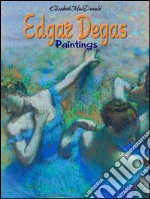
Edgar Degas paintings. E-book. Formato Mobipocket Elizabeth Macdonald - Elizabeth Macdonald, 2015 -
This Art Book contains Foreword and annotated reproductions of Edgar Degas masterpieces, date and interesting facts page below. Edgar Degas seems never to have reconciled himself to the label of "Impressionist," preferring to call himself a "Realist" or "Independent." Nevertheless, he was one of the group’s founders, an organizer of its exhibitions, and one of its most important core members. Like the Impressionists, he sought to capture fleeting moments in the flow of modern life, yet he showed little interest in painting plain air landscapes, favoring scenes in theaters and cafes illuminated by artificial light, which he used to clarify the contours of his figures, adhering to his Academic training. Unusual vantage points and asymmetrical framing are a consistent theme throughout Degas's works.