
Silvana Editoriale eBooks
eBooks editi da Silvana Editoriale

Contracts, Wills, Marriages and Rings: Opera and Private Law. E-book. Formato EPUB Filippo Annunziata - Silvana Editoriale, 2018 -
Opera, for its inherent multimedia nature (text, music, scenography, ballet, representation), lends itself to analysis of interdisciplinary nature, including those that touch upon legal topics. The stories told in the great masterpieces of European opera are, frequently, based on facts relevant for criminal law: murders, abductions, extortions, kidnappings, massacres, and other types of crimes fill the stories of opera since its origin. In the events narrated in the texts of musical theatre, in the masterpieces by Verdi, Donizetti, Bellini, Wagner, and many others there are, however, also addressed issues that touch upon the less obvious areas of private law: librettos often talk about contracts, donations, wills, weddings, family relationships, debts and money issues in general. In Gaetano Donizetti’s L’elisir d’amore, Nemorino – in love with the beautiful but indifferent Adina – is the victim of a real contract scam perpetrated by Dulcamara. In La sonnambula by Vincenzo Bellini, Elvino snatches the engagement ring given to Amina thinking she was unfaithful: he revokes a donation made in view of marriage, and maybe breaks a rule of law. In Richard Wagner’s Das Rheingold, one witnesses a sensational case of breach of contract, to be read in the light of the emergence, in the nineteenth century, of a new sensibility for market economy and the increasingly central value of contracts in social relations. In Le nozze di Figaro by Mozart, there is a strange marriage vow, executed in order to guarantee the repayment of a debt. In ten opera masterpieces, selected by the author, these issues are examined in the light of the law applicable at the place of the first performance of the opera, compared with that of the sources of the libretto, and today’s laws. For Richard Wagner’s Das Rheingold and Gianni Schicchi by Giacomo Puccini, the analysis highlights the cultural models of reference, reflected in the narrative. In addition to the delicate legal aspects of the plot, the author entertains the reader with the origins of librettos, cultural and musical references for each selected work, in a refined kaleidoscope of citations.
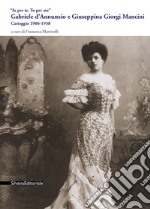
“Io per te. Tu per me”: Gabriele d’Annunzio e Giuseppina Giorgi Mancini - Carteggio 1906-1938. E-book. Formato PDF Aa. Vv. - Silvana Editoriale, 2017 -
Il carteggio tra Gabriele d’Annunzio e Giuseppina Giorgi Mancini documenta l’importanza di una storia d’amore che, finora, era rimasta “in ombra” nella biografia del Poeta e che, in alcuni casi, era stata sminuita e persino denigrata. La ricostruzione dello scambio epistolare tra i due amanti offre innanzitutto la testimonianza di come quell’amore fu uno dei più intensi vissuti da d’Annunzio, e non fu mai dimenticato. Ne è conferma la durata temporale del carteggio che, fatta eccezione per quello con Maria Hardouin di Gallese, è il più longevo tra tutti i suoi carteggi d’amore, ma anche uno dei più importanti sul piano artistico e biografico. Le lettere indirizzate a Giuseppina testimoniano lo stretto rapporto che si crea sempre tra i vari generi di scrittura dannunziani, documentano la vita del Poeta durante il periodo fiorentino, attestano la sua innata capacità di usare molteplici registri linguistici e l’intenzione di sperimentare, fin da quegli anni, una prosa diversa, memoriale, diaristica. Il carteggio consente poi di colmare anche un’altra grave lacuna, quella dell’univocità dei documenti sinora disponibili a ricostruire la vicenda, restituendoci anche l’altra “voce” protagonista, quella di Giuseppina.
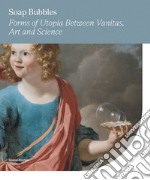
Soap Bubbles: Forms of Utopia Between Vanitas, Art and Science. E-book. Formato EPUB Michele Emmer - Silvana Editoriale, 2019 -
As symbols of fragility, of the transience of human ambition, and of life itself, soap bubbles have fascinated generations of artists since the sixteenth century with their colorful games, their brightness, and their lightness. This volume documents the beginning of scientific interest in soap films, symbols of ephemeral beauty and vanitas, and the inspiration artists drew from them over a period ranging from the sixteenth century to today. Through paintings, engravings, photographs, flyers, and advertising posters, we trace the evolution of this iconographic subject: from Guido Reni, Fra' Galgario, Jan Brueghel the Younger, Gerrit Dou, and Karel Dujardin, to the twentieth century works of Man Ray, Max Beckmann, Giulio Paolini, and arriving at never-before-seen creations in the field of contemporary architecture. This is an exemplary story of the connection between art and science that spans all of Europe, filling us with wonder to this day.