
Valentina Porcu eBooks
eBooks editi da Valentina Porcu
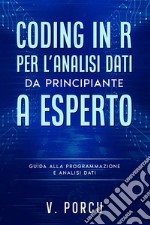
Coding in R per l'analisi dati - da principiante a esperto. E-book. Formato PDF Valentina Porcu - Valentina Porcu, 2022 -
Questo testo di base di programmazione con R per aspiranti data analyst nasce per accompagnare un principiante nella programmazione, dalle basi del linguaggio di programmazione (uno dei più conosciuti e utilizzati nel campo dell'analisi dati) fino all'utilizzo della statistica descrittiva.Al termine di questo libro sarete in grado di creare, importare, manipolare e gestire dei dataset. Impareremo insieme come scaricare, installare e utilizzare alcuni dei più importanti tool per l'utilizzo di R. Passeremo poi alla creazione degli oggetti: R si basa su alcune strutture che è necessario conoscere, come vettori, matrici, liste e dataframe. Una volta che avremo capito come creare e manipolare queste strutture dati, estrarne degli elementi e salvarle in locale sul computer, passeremo all'utilizzo di loop e alla creazione di funzioni. Nella sezione successiva vedremo una serie argomenti utili: come impostare una cartella di lavoro, come installare e richiamare un pacchetto, come ottenere delle informazioni sui dati, dove trovare dei dataset per i test e ottenere aiuto su una funzione. Quando si analizzano dei dati ci si imbatte prima o poi nei dataframe cosiddetti casi x variabili. Vedremo quindi come importare un dataframe dal computer, o da internet, su R. Esistono molte funzioni adatte allo scopo e molti pacchetti che ci sono utili per importare dei dati che sono in alcuni formati particolari, come ad esempio i formati per Excel, il .csv, il .txt o il JSON. Vedremo poi come manipolare i dati, creare nuove variabili, aggregare i dati, ordinarli in maniera orizzontale e longitudinale, unire due dataset. Per fare questo utilizzeremo alcuni pacchetti e funzioni specifiche, come dplyr, tidyr o reshape2. Vedremo anche brevemente come interfacciarci a un database e utilizzare altri pacchetti per snellire la gestione di dataset un po' più grandi. R è un linguaggio molto importante anche nell'ambito della statistica. Impareremo quindi alcune delle funzioni di base, come calcolo delle medie per riga o per colonna, e le funzioni statistiche più comuni nell'ambito della statistica descrittiva. Quando si parla di analisi dati, ci troveremo spesso a creare dei grafici per spiegare i nostri dati e le nostre analisi. Per questo motivo dedichiamo una parte del libro a vedere come creare dei grafici sia con le funzioni della libreria di base, sia con il pacchetto ggplot2. Negli ultimi paragrafi vedremo come creare e esportare dei report e delle slide, riepilogheremo gli argomenti visti e le funzioni utilizzate, e vedremo il materiale di supporto.
R coding for data analystsfrom beginner to advanced. E-book. Formato EPUB Porcu Valentina - Valentina Porcu, 2023 -
This book on coding with R for aspiring data analysts is designed to be a guide in this programming language from the basics. By the end of this book, you will be able to create, import, manipulate and manage datasets. We will learn together how to download, install and use some of the most important tools and libraries for using R. We will then move on to the creation of objects: R is based on certain structures that you need to know, such as vectors, matrices, lists and dataframes. Once we understand how to create and manipulate these data structures, extract elements from them and save them locally on the computer, we will move on to the use of loops and the creation of functions. We will look at a number of useful topics: how to set up a working directory, how to install and retrieve a package, how to get information about data, where to find datasets for testing, and how to get help with a function. When analysing data, we need to understand the concept of dataset or dataframe. We will therefore see how to import a dataframe from your computer, or from the internet, into R. There are many functions that are suitable for this purpose, and many packages that are useful for importing data that is in some particular format, such as the formats for Excel, .csv, .txt or JSON. We will then see how to manipulate data, create new variables, aggregate data, sort them horizontally and longitudinally, and how to merge two datasets. To do this, we will use some specific packages and functions, such as dplyr, tidyr or reshape2. We will also briefly see how to interface with a database and use other packages to streamline the management of somewhat larger datasets. R is also a very important language in the field of statistics. We will therefore learn some of the basic functions, such as calculating averages per row or per column, and the most common statistical functions in the field of descriptive statistics. When it comes to data analysis, we will often find ourselves creating graphs to explain our data and analyses. For this reason, we devote part of the book to seeing how to create graphs with both the functions of the basic library and the ggplot2 package. In the final sections, we will see how to create and export reports and slides, summarise the topics we have seen and the functions we have used, and look at the supporting material.