
Finanza Libri
Libri con argomento Finanza Raggruppamenti politici, socio-economici e strategici
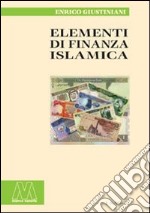
Elementi di finanza islamica Giustiniani Enrico - Marcovalerio, 2006 - Saggi
La finanza islamica è un sistema etico ed equo che si fonda sul Corano. Una risposta concreta al riconoscimento che il divieto di interesse, da parte di tutte le principali religioni, si basa su un grande fondamento logico: non può esserci guadagno senza una compartecipazione al rischio. I banchieri Islamici condividono con i loro clienti il rischio creditizio, assumono depositi e svolgono tutte le attività normali di banca, nel pieno rispetto delle leggi dei paesi in cui operano, ma senza utilizzare il tasso d'interesse né la speculazione, proibiti dall'Islam. L'obiettivo centrale dell'etica islamica nell'economia non si discosta da quello cristiano nel perseguire attraverso l'azione umana la giustizia sociale e una migliore distribuzione della ricchezza, né esprime una condanna aprioristica contro il capitalismo, ma a differenza dell'occidente, nel mondo islamico è rimasto inalterata la prevalenza in campo economico dell'etica e della morale rispetto alle leggi di mercato. In questo volume le principali nozioni sul sistema finanziario islamico, dai riferimenti coranici ai principali strumenti bancari, le possibili criticità e le opportunità di questo modo diverso di far banca. Enrico Giustiniani, pubblicista, analista finanziario e dottore commercialista. Vive a Roma e lavora da diversi anni nel mondo della finanza.

Unione europea. Opportunità e rischi dei finanziamenti europei Del Piano Carlo D'elia M. Teresa - Laurus Robuffo, 2011 -
Unione europea. Opportunità e rischi dei finanziamenti europei - Laurus Robuffo
The informational capacity of financial performance indicators in European Annual Reports Bini Laura Dainelli Francesco - Maggioli Editore, 2011 - Università
Corporate valuations are strongly based on financial indicators, which portray different aspects of the global firm equilibrium. European Directive No. 51/2003 specifically requires their publication in the Annual Report.This work analyzes Financial Performance Indicator (FPI) disclosures in the narrative section of annual reports in Europe. We analyze a sample of 237-companies of four countries - Italy, Germany, the Netherlands and the UK - in order to help the standardization process of European Union and provide useful disclosure benchmarks to firms. Manual analysis is employed to examine the 2008's annual reports.In the light of decision usefulness framework, the informational capacity of performance indicators consists of two dimensions: - How much information is provided (quantity). Indicators are also distinguished into six classes: Cash Flow ratio. Debt ratio. Growth ratio. Liquidity ratio. Market ratio. Profitability ratio. - How this information is provided (quality). Qualitative aspects of FPI disclosure are measured with reference to qualitative characteristics defined by the Framework of the IASB. The results highlight the stereotype of European FPI communication: a firm, wherever it operates, publishes five-six indicators, regardless of its size and industry. EBITDA, EBIT, DPS, and ROCE are almost always published and they are measures the market considers relevant. The same firm, when choosing to publish an indicator, tends to respect the minimum quality standards wanted by the financial community and the comparability is the most careful aspect. If that firm is located in the UK, the quality threshold is higher.Looking at the differences over the four countries, there is certain homogeneity in the quantity of FPI communication and this fact might be a first result of the Directive 51/2003. Furthermore, a negative relation between the quantity and the quality of FPI disclosure is found. This might mean that two strategies of communication exist: (1) publishing an elevated number of indicators, at the expense of their quality. (2) publishing few indicators, and paying more attention to their quality. These findings call for further research on the determinants of FPI disclosure. Funding for this project has been granted by the Institute of Chartered Accountants of Scotland. Francesco DainelliLecturer in Financial Accounting at the University of Florence is the responsible for this research project. Laura BiniPhD in Financial Accounting and Researcher fellowship at the University of Florence.