
Libri di
Bibliografia di : tutti i libri in vendita online editi da Ledizioni pubblicati nella collana Ispi

Iran looking East. An alternative to the EU? Perteghella A. (Cur.) - Ledizioni, 2019 - Ispi
In February 2018, anticipating the US withdrawal from the JCPOA, Iran's Supreme Leader Ayatollah Ali Khamenei declared a policy of "preferring East over West", thus paving the way for deeper cooperation with Asian powers such as China, Russia, and India. Differently from the "Look East" policy promoted during the presidency of Ahmadinejad (2005-2013), the current Iranian strategy is not only functional to escape the US-led isolation, but it rather seems devoted to the consolidation of a block of power which can commit to security and economic schemes in alternative to the Western-dominated ones. This ISPI report aims to answer few crucial questions: Which are the major initiatives promoted within Iran's "Look East 2.0" strategy? To what extent will Tehran succeed in creating a solid Eastern block? What will be the influence of the wider geopolitical context? And finally, what role is left for the EU? ISPI. L'ISPI è un think tank indipendente dedicato allo studio delle dinamiche politiche ed economiche internazionali fondato nel 1934. È l'unico istituto italiano - e tra i pochissimi in Europa - ad affiancare all'attività di ricerca un significativo impegno nella formazione, nella convegnistica e nell'analisi dei rischi e delle opportunità a livello mondiale per le imprese e le istituzioni. L'ISPI privilegia un approccio interdisciplinare e "policy-oriented" reso possibile da un team di ricerca di oltre 50 analisti e può inoltre contare su un network internazionale di 70 università, think tank e centri di ricerca. Nella classifica redatta dall'Università di Pennsylvania, l'ISPI si è posizionato al primo posto al mondo tra i "Think Tank to Watch" nel 2019.
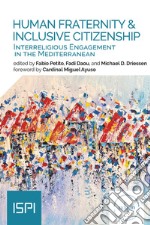
Human fraternity & inclusive citizenship. Interreligious engagement in Mediterranean Petito F. (Cur.) Daou Fadi (Cur.) Driessen Michael D. (Cur.) - Ledizioni, 2021 - Ispi
Polarization and discrimination linked to religion have been increasing in many parts of the world, including on the two shores of the Mediterranean. Against this background, however, seeds of hope have emerged from a number of religious leaders who have called for a new narrative of human fraternity and inclusive citizenship. This report analyzes the opportunities which human fraternity and inclusive citizenship offer for government-religious partnerships aimed at building more inclusive and peaceful societies across both shores of the Mediterranean and puts forward interreligious engagement as a new policy framework that recognizes and amplifies these novel dynamics. Can the interreligious narrative of human fraternity help to create new inclusive forms of citizenship? How can governments and international organizations better partner with religious leaders and communities to concretely build inclusive societies from the MENA region to Europe? ISPI. L'ISPI è un think tank indipendente dedicato allo studio delle dinamiche politiche ed economiche internazionali fondato nel 1934. È l'unico istituto italiano - e tra i pochissimi in Europa - ad affiancare all'attività di ricerca un significativo impegno nella formazione, nella convegnistica e nell'analisi dei rischi e delle opportunità a livello mondiale per le imprese e le istituzioni. L'ISPI privilegia un approccio interdisciplinare e "policy-oriented" reso possibile da un team di ricerca di oltre 50 analisti e può inoltre contare su un network internazionale di 70 università, think tank e centri di ricerca. Nella classifica redatta dall'Università di Pennsylvania, l'ISPI si è posizionato al primo posto al mondo tra i "Think Tank to Watch" nel 2020.
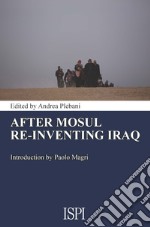
After Mosul. Re-inventing Iraq Plebani A. (Cur.) - Ledizioni, 2017 - Ispi
After Mosul. Re-inventing Iraq - Ledizioni