
A eBooks
eBooks di A editi da Egea con argomento Cina Economia
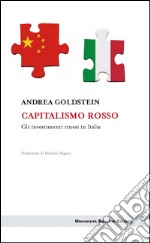
Capitalismo rosso: Gli investimenti cinesi in Italia. E-book. Formato EPUB Andrea Goldstein - Egea, 2016 -
Sono almeno vent'anni che la Cina sta cambiando il mondo, attraverso le sue riforme, le sue produzioni e le sue imprese, che innovano e investono anche in Italia. Pirelli nelle mani di ChinaChem, Ansaldo Energia partecipata da Shanghai Electric, Shanghai Bright Food che compra il gruppo oleario toscano Salov, mentre Krizia è passata a Shenzhen e anche Inter e Milan sono state acquistate dai cinesi. Tutto questo è un bene? Secondo molti è soprattutto un rischio, perché i capi azienda orientali sarebbero interessati al nostro know how e ai nostri marchi, pronti poi a trasferire in Cina la produzione. Secondo altri è invece un'opportunità, perché gli investimenti italiani delle multinazionali rosse aprirebbero prospettive di crescita sul mercato cinese, e non solo. C'è bisogno di chiarezza: è ciò che fa il libro, affrontando in modo serio e pragmatico un tema che si presta a molte polemiche e a troppi pregiudizi.
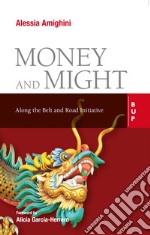
Money and Might: Along the Belt and Road Initiative. E-book. Formato EPUB Alessia Amighini - Egea, 2021 -
Launched by President Xi in 2013, the Belt and Road Initiative is at the heart of China’s internationalization strategy. In addition to the development of transportation infrastructure, trade and communication, it pursues financial cooperation with the rest of the world. Indeed, finance is the real lifeblood of the Initiative, the most innovative and disruptive part in its operational, institutional and political aspects. Through a network of offshore financial centers scattered across the continents, Chinese banks and stock exchanges are increasingly connected with foreign countries, while remaining within a financial system protected by controls on international capital flows, a regime of controlled exchange rate fluctuation and a publicly-owned credit sector. The network functions as a system of communicating vessels that pushes the circulation of the renminbi across borders and the “people’s currency” becomes an instrument of “reverse” globalization: it is not China that opens its financial sector to other countries, but the latter that welcome a growing Chinese presence on international markets. Along the BRI, finance flows smoothly and with it the soft power by which China is setting a new course in globalization.