
Massimo Firpo eBooks
eBooks di Massimo Firpo di Formato Pdf SCIENZE UMANE
Massimo Firpo, accademico dei Lincei, ha insegnato Storia moderna alle Università di Cagliari e di Torino (di cui è professore emerito) e alla Scuola Normale di Pisa. Tra le sue più recenti pubblicazioni, L'eretico che salvò la Chiesa. Il cardinale Giovanni Morone e le origini della Controriforma (con G. Maifreda, Torino 2019) e Studi e lezioni sulla vita religiosa del Cinquecento (Alessandria 2020). Per Laterza è autore di: Riforma protestante ed eresie nell'Italia del Cinquecento. Un profilo storico (1993); Artisti, gioiellieri, eretici. Il mondo di Lorenzo Lotto tra Riforma e Controriforma (2001); Vittore Soranzo vescovo ed eretico. Riforma della Chiesa e Inquisizione nell'Italia del Cinquecento (2006); La presa di potere dell'Inquisizione romana. 1550-1553 (2014); Juan de Valdés e la Riforma nell'Italia del Cinquecento (2016); Immagini ed eresie nell'Italia del Cinquecento (con F. Biferali, 2016).
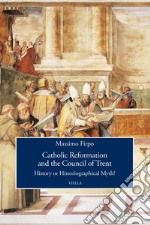
Catholic Reformation and the Council of Trent: History or Historiographical Myth?. E-book. Formato PDF Massimo Firpo - Viella Libreria Editrice, 2023 -
What were the salient features of the reaction launched by the Catholic Church in the 16th century in response to the dramatic crisis of the Protestant Reformation? And which historical terms best define it? Scholars have spoken of Catholic Restoration, Catholic Reformation and Counter-Reformation with varying success, often interpreting these concepts as alternatives and at times looking to draw a difficult synthesis between them. This book examines the historiography of the so-called Catholic Reformation and its aporias, focusing on the stunted and sometimes non-existent application of the decrees issued by the Council of Trent even a century after its end. This, however, did not prevent the creation of a myth of the Tridentine council as the genesis of a profound and widespread religious renewal, even though it encountered more obstacles than support in Rome. It also explains the ongoing validity of the concept of Counter-Reformation, which should be understood as the constant opposition of the Roman curia to any authentic Catholic Reformation.