
Firenze University Press eBooks
eBooks editi da Firenze University Press con argomento Letteratura Russa
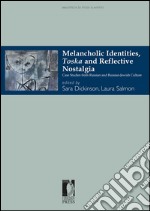
Melancholic Identities, Toska and Reflective Nostalgia: Case Studies from Russian and Russian-Jewish Culture. E-book. Formato PDF Dickinson Sara - Firenze University Press, 2015 -
This book examines the feeling that we often refer to as ‘nostalgia’ from the perspective of writers and artists located on the (imperial, Soviet, and Post-Soviet) periphery of Russian culture who regard the center of the culture from which they have been excluded with varying degrees of longing and ambivalence. The literary and artistic texts analyzed here have been shaped by these author’s ruminations on social and psychological marginalization, a process that S. Boym has called ‘reflective nostalgia’ and that the authors of this volume also refer to as ‘toska’. Sara Dickinson, associate professor of Russian at the University of Genoa, has published on Russian travel writing, problems of identity, women’s writing, the history of emotions, and Nabokov. Laura Salmon, full professor of Russian at the University of Genoa, has authored five books and more than one hundred scholarly publications that focus on Russian-Jewish culture, humor studies, and translation theory.
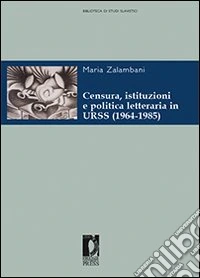
Censura, istituzioni e politica letteraria in URSS (1964-1985). E-book. Formato PDF Maria Zalambani - Firenze University Press, 2010 -
La società sovietica è sempre stata caratterizzata da un forte istituto censorio che di fronte al potere della parola scritta ha messo in opera una serie di istituzioni altamente repressive. Ma la censura non necessariamente esercita il suo potere attraverso forme coercitive; ci sono modalità di intervento che si espletano attraverso una complessa rete di istituzioni culturali, in grado di "produrre" la società, espungendo pensieri ed atteggiamenti pericolosi per il sistema ed organizzando al contempo una serie di organismi destinati a forgiare comportamenti e mentalità ortodossi, tanto da rendere spesso quasi inutile la funzione del censore esterno, sostituito dal "censore dell'anima". Il libro qui presentato cerca di evidenziare questo secondo aspetto della censura, senza tuttavia trascurare la grande macchina repressiva messa in atto dal potere sovietico.